
Sourcing Fabric for Blanket Hoodies: A 5-Step Pro Guide (2025)
For any apparel brand, understanding the art of sourcing fabric for blanket hoodies is the most critical step to creating a successful product. In this booming market, the fabric is the brand. The entire customer experience—the warmth, the luxurious softness, the “cozy factor”—is delivered by the material you choose. A poor choice results in a product that feels cheap, whereas a great choice leads to rave reviews.
As a sourcing agency that works directly with textile mills, we’ve created this ultimate guide to demystify the process. We’ll walk you through the five crucial steps, from understanding technical specs to final quality control.
Step 1: Understanding the Most Important Fabric Metric (GSM)
Before we talk about fabric types, you must understand GSM (Grams per Square Meter).
What is GSM in Fabrics?
GSM is a measurement of the fabric’s density and weight. It is the single most important objective indicator of a fabric’s quality, warmth, and plushness. A higher GSM means a heavier, thicker, and more luxurious-feeling fabric.
Why GSM is Critical for Blanket Hoodies
The GSM directly impacts the perceived value of your product. A customer can instantly feel the difference between a thin, low-GSM hoodie and a thick, high-GSM one. When you create your Product Specification Sheet, the required GSM for both the outer and inner fabric is a non-negotiable detail.
Typical GSM Ranges for Blanket Hoodies
200-240 GSM: Standard, good quality. The most common choice.
240-280 GSM: Premium, very plush and warm. Creates a noticeably more luxurious product.
Below 200 GSM: Lighter weight. May feel thin or less premium to the customer.
Step 2: Choosing the Best Materials for Your Blanket Hoodie
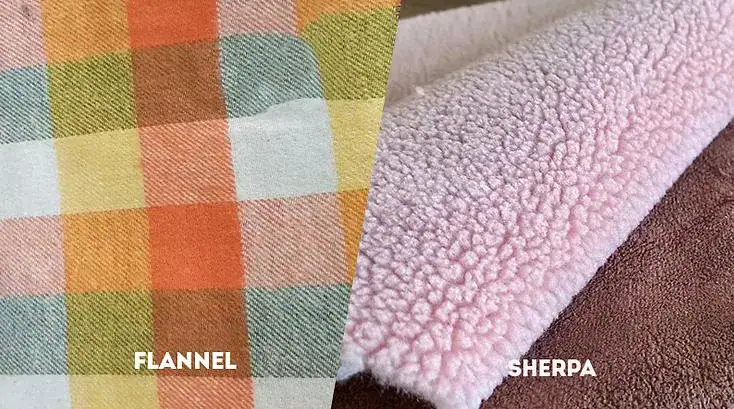
Most blanket hoodies use a combination of a smooth outer fabric and a plush inner lining.
| Fabric | Common Use | Key Characteristics | Feel & Texture |
| Flannel Fleece | Outer Layer | A very soft, high-pile version of standard fleece. Durable, holds color well, and has an anti-pilling finish. | Extra soft and plush, with a velvety, smooth feel. |
| Sherpa | Inner Lining | Mimics the look and feel of sheep’s wool. Excellent insulation traps body heat, making it extremely warm. | Bumpy, wooly, and exceptionally soft and cozy. |
| Minky | Outer Layer | Ultra-soft, often used for premium baby blankets. Has a slight sheen and a very luxurious drape. | Velvety, silky-smooth, almost fur-like. |
| Coral Fleece | Either Layer | Lighter than flannel fleece but still very soft. Can be prone to pilling if not high quality. | Fuzzy, soft, and sponge-like. |
The Classic Combination: The most popular and commercially successful blanket hoodie design combines a Flannel Fleece outer layer (approx. 220 GSM) with a Sherpa inner lining (approx. 220 GSM).
Step 3: Your Strategic Approach to Sourcing Fabric for Blanket Hoodies
You have two primary ways to approach your production:
Path A: The One-Stop-Shop (Vertical Garment Factory)
In this model, you work with a single garment factory that also sources the fabric for you based on your specifications.
- Pros: Much simpler, as you only need to manage one supplier.
- Cons: Less control over the exact fabric mill, and potentially higher cost as the factory adds a markup on the fabric.
- Best For: Brands just starting or those using standard, widely available fabrics.
Path B: Sourcing Separately (Textile Mill + CMT Factory)
Here, you source your fabric directly from a specialized textile mill and then provide it to a “CMT” (Cut, Make, Trim) garment factory for assembly.
- Pros: Full control over fabric quality and customization, along with lower material costs.
- Cons: More complex, requiring professional Supplier Management of two different partners.
- Best For: Established brands with specific quality requirements, custom colors, or those looking to optimize their cost structure at scale.
Step 4: The Quality Control Checklist for Fabrics
When inspecting your fabric (or final garment), your Quality Inspection should focus on these key points:
- GSM Weight Verification: An inspector must use a calibrated scale and a circular cutter to get a precise GSM measurement from the production fabric. It must be within a small tolerance (e.g., ±5%) of your specified GSM.
- Color Consistency (Lab Dips): The color of the bulk fabric must be checked against your approved Pantone color standard under controlled lighting.
- Fabric Defect Inspection: The fabric should be checked for common defects like snags, holes, stains, or printing errors before it’s cut.
- Hand-Feel and Softness Comparison: The production fabric must have the same softness and texture (“hand-feel”) as the pre-production sample you approved.
- Final Garment Stitching and Seam Quality: On the finished blanket hoodie, all seams must be strong, straight, and free of loose threads.
Step 5: Frequently Asked Questions (FAQ) about Sourcing Fabric
Q1: What is the MOQ for custom-colored fabric?
Direct from a textile mill, the MOQ (Minimum Order Quantity) for dyeing a custom Pantone color is typically 500 to 1,000 kilograms per color.
Q2: Can I use natural fibers like cotton?
You can, but 100% polyester fabrics like fleece and sherpa dominate this product category. This is because they offer superior warmth, durability, and a plusher feel at a much more effective cost compared to cotton flannel or sherpa.
Q3: How do I ensure my fabric is safe?
You can request that your fabric be tested for harmful substances and certified by a standard like OEKO-TEX STANDARD 100. This is a globally recognized certification for textile safety.
Conclusion: The Fabric Defines Your Brand's Comfort
For a product like a blanket hoodie, your customer isn’t just buying a garment; they’re buying a feeling of comfort, warmth, and luxury. That feeling is delivered entirely by the fabric.
Investing time in understanding materials, specifying the correct GSM, and implementing rigorous quality control is the most important investment you can make in your brand’s success and your customers’ happiness. The heart of this process starts at the famous Guangzhou fabric market, a key stop in our apparel sourcing process.
Need help sourcing the perfect fabric for your apparel line?
Schedule a free consultation with our sourcing experts. We have deep relationships with textile mills and can manage the entire production process for you.
Table of Contents
Share: